
By: Od. Mariana Pineda | Reading time: 5 minutes
You exercise, eat a balanced diet, drink green juice and lemon water on an empty stomach to "alkalize" your body. You take great care of yourself, but when you look in the mirror you notice something strange: your teeth look yellower and yellower, the edges look transparent or chipped, and you've started feeling sensitivity with cold drinks.
Why does your smile seem to be aging early when you have such a healthy lifestyle?
At Pineda Dental Studio we constantly see patients with this profile: business people, athletes and wellness-minded people who suffer from what modern dentistry calls "Executive Syndrome". The main cause isn't cavities, but a silent, invisible enemy: acid erosion.
Your enamel's false friends
Enamel is the hardest tissue in the human body, but it has a chemical weakness: acids. When the pH in your mouth drops below 5.5, enamel starts to dissolve microscopically.
Today's lifestyle encourages habits that are real "acid bombs" for your teeth:
Lemon water on an empty stomach: Considered the ultimate detox ritual, it's extremely corrosive to enamel when drunk every day.
Kombucha, detox juices and sports drinks: The isotonic drinks you have at the gym and trendy fermented drinks are highly acidic.
Stress and acid reflux: Daily tension and poor sleep often cause digestive problems. Silent acid reflux at night bathes your teeth in stomach acid and severely wears the inner surfaces of your teeth.
Habits that erode enamel
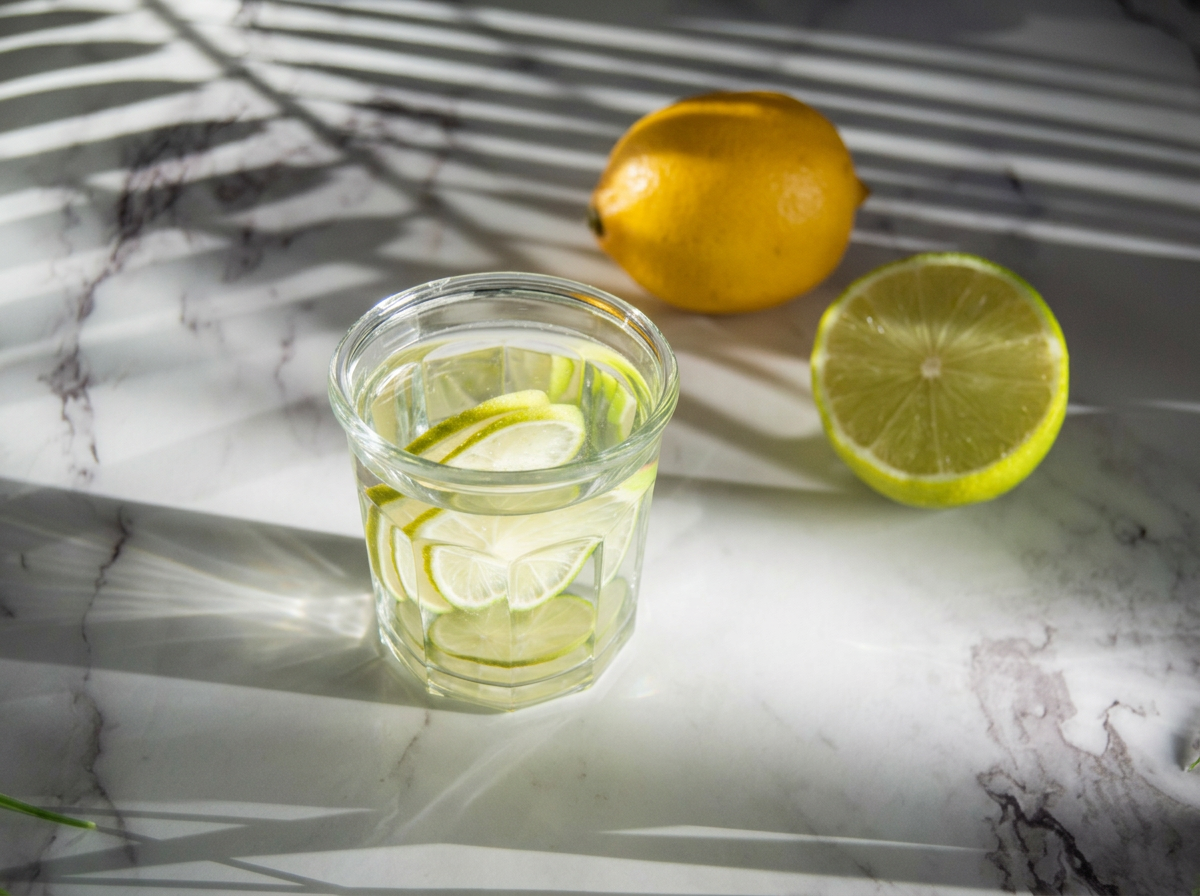
Lemon water on an empty stomach is one of the "healthy" habits that wears enamel the most when drunk every day.
Illustrative image.
Why do teeth look yellow and transparent?
A tooth has two main layers: enamel (which is white and translucent) and dentin (the inner layer, which is naturally yellow).
When acids dissolve the enamel, two things happen:
The white layer becomes so thin that the yellow dentin starts to show through (which is why teeth look yellow, and no traditional whitening can fix it).
As the edges of the teeth lose thickness, they become as fragile as glass, take on a greyish or transparent tone and chip when chewing.
The Pineda Dental Studio solution: biomimetic dentistry
For worn, thin teeth, the old-school solution was terrible: grinding (filing) the tooth down even further to fit a traditional crown or cap.
With my training in fixed prosthodontics, my approach is the exact opposite. We apply biomimetic dentistry, an advanced field that aims to imitate nature and give the tooth back what it lost, preserving as much of the remaining healthy tissue as possible.
Treatment consists of bonding nanohybrid composites or ultra-thin ceramic veneers:
We don't grind down your tooth.
With latest-generation chemical bonding techniques, we replace millimeter by millimeter the enamel that acid dissolved.
Devolvemos el grosor, la resistencia, la forma juvenil y la blancura natural a tu sonrisa.
When wear is greater, we also use adhesive inlays, which rebuild the tooth while preserving its structure. You can see how we work in oral rehabilitation and prosthetics.
Prevention and follow-up
Treating the consequences without tackling the cause makes no sense. Besides restoring the look and function of your teeth, at Pineda Dental Studio we give you personalized protocols (such as remineralizing toothpastes, reusable straws and protective guards) so your lifestyle and your smile can live in harmony.
If you feel sensitivity or notice your teeth getting shorter or yellower, it's essential to stop the erosion before the structural damage gets worse.
Frequently asked questions
What is acid erosion?
It's enamel wear caused by acids, not bacteria. It starts when the pH in your mouth drops below 5.5.
What habits cause it?
Regularly drinking lemon water, kombucha or isotonic drinks. Reflux too.
My teeth look yellow because of wear. Will whitening help?
No. That shade is the dentin, showing through thinner enamel. Whitening doesn't replace enamel.
How is it treated?
It depends on the wear: biomimetic composites, ultra-thin ceramic veneers or adhesive inlays. We decide at the assessment.
How can I prevent it?
With remineralizing toothpastes, drinking acidic drinks through a straw and, if needed, wearing a protective guard.
How much does it cost?
It depends on the treatment you need. We'll tell you after the assessment.
📍 We look forward to seeing you at our clinic in Recoleta, Buenos Aires.
About the author and clinical director
Od. Mariana Pineda is a dentist (José Antonio Páez University, 2014) and trained in fixed, removable and implant-supported prosthodontics at the Argentine Dental Association (2018).
As clinical director of Pineda Dental Studio, she leads a team of more than 10 dentists who apply minimally invasive and biomimetic dentistry to restore the look and function of complex smiles, with advanced technology and a human approach focused on the patient's overall wellbeing.
Medical notice: the information in this article is for educational purposes. The diagnosis of dental erosion and its severity are assessed clinically at the clinic.
Scientific sources consulted
Lussi, A., et al. (2004). "Dental erosion: an overview with emphasis on chemical and histopathological aspects." Caries Research.
Magne, P. (2006). "Composite resins and bonded porcelain: the postamalgam era?" Journal of the California Dental Association.
Dawes, C. (2003). "What is the critical pH and why does a tooth dissolve in acid?" Journal of the Canadian Dental Association.
